
- by hajar boulagjam
Is PDRN Skincare Safe for Acne?
- by hajar boulagjam
If your skin breaks out easily, you've probably learned to be suspicious of anything new. Here's an honest look at whether PDRN is worth trying if you're acne-prone.
The K-beauty world is flooded with new actives every month, and PDRN is one of the most talked-about of the past two years. But acne-prone skin has its own rules — some of the trendiest ingredients make breakouts worse instead of better. So does PDRN belong in a routine built around not triggering the next flare-up?
The short answer is more encouraging than you might expect. Here's what science actually shows.
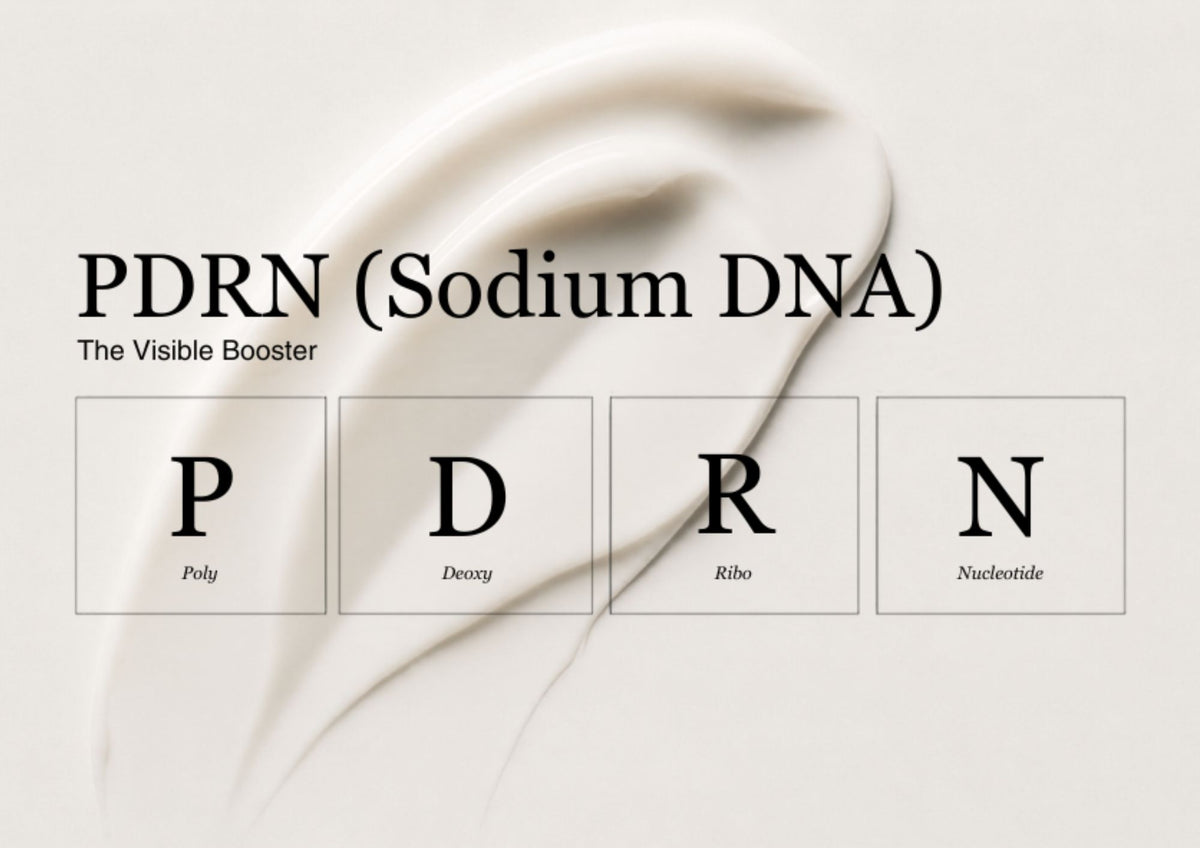
PDRN — short for Polydeoxyribonucleotide — is a purified fragment of DNA sourced from salmon or trout, used in skincare to support skin repair, hydration, and elasticity through a documented cellular mechanism (the A2A adenosine receptor). It's been used in Italian regenerative medicine since the 1980s and has become a K-beauty staple over the past decade.
For the full breakdown of what PDRN is, where it comes from, and how it works, see our complete guide: What is PDRN?.

Acne-prone skin isn't just "oily skin." It's a specific skin condition with its own biology — and understanding why breakouts happen makes it easier to see why some ingredients help and others make things worse.
The four factors driving most acne:
Traditional acne actives (retinol, salicylic acid, benzoyl peroxide) work by attacking one or more of these factors. They work — but they often come with irritation, dryness, redness, and a compromised skin barrier as collateral damage.
Here's the trap: a compromised barrier makes acne worse in the long run. A broken barrier means more transepidermal water loss, more inflammation, more reactivity — and, eventually, more breakouts. It's a self-reinforcing cycle. That's why acne-prone people who've been treating aggressive breakouts with aggressive actives often find their skin is now reactive and still breaking out.
This is where PDRN starts to look interesting.

PDRN is not comedogenic. As a purified DNA fragment, it doesn't clog pores or trap oil. Its function in skincare is signal-based — it interacts with the A2A adenosine receptor to support cellular repair — not physical or occlusive. That means PDRN itself carries no meaningful comedogenic risk for acne-prone skin.
The comedogenic scale (0–5) rates skincare ingredients based on their tendency to block pores. Common comedogenic offenders include coconut oil (rating 4), isopropyl myristate (rating 5), and some heavy waxes. PDRN doesn't function anywhere near that category — it isn't an oil, an occlusive, or a film-former. It's a molecular signal.
What matters more, for acne-prone skin, is the rest of the formula. A PDRN cream padded out with heavy oils or fragrance can still trigger breakouts — not because of the PDRN, but because of what it's blended with. We'll come back to this shortly.
For the ingredient itself, the answer is clear: PDRN is non-comedogenic and safe for acne-prone skin from a pore-clogging standpoint.
Beyond being non-comedogenic, PDRN has one property that makes it particularly interesting for acne-prone skin: its documented anti-inflammatory mechanism.
Inflammation is at the heart of what turns a clogged pore into a visible breakout — and what turns a small pimple into an angry, painful cyst that leaves a dark mark for weeks. Ingredients that reduce inflammation without stripping the skin can support acne-prone skin without the collateral damage of stronger actives.
PDRN's mechanism of action goes through the A2A adenosine receptor — a receptor that, when activated, has been studied for modulating inflammatory responses. Clinical reviews suggest PDRN may help down-regulate certain pro-inflammatory pathways (including IL-6 and TNF-alpha signaling in some studies) while supporting fibroblast activity for tissue repair.
For acne-prone skin, this could translate to:
Most of the anti-inflammatory research on PDRN comes from injectable and wound-healing contexts, not topical acne treatment specifically. The clinical evidence base for PDRN in acne management is still growing, and no reputable brand should sell PDRN as an acne treatment or cure.
What can be said — cautiously — is that PDRN's mechanism suggests it may be a helpful supporting ingredient in an acne-conscious routine, particularly for calming inflammation and supporting repair. It's not a replacement for salicylic acid, benzoyl peroxide, or prescription retinoids. But it plays well alongside them.

Here's the honest truth most K-beauty content skips: it's rarely the star ingredient that causes breakouts. It's what surrounds it.
A jar labeled "PDRN serum" can contain twenty other ingredients. Some of them are actively bad news for acne-prone skin. When you're shopping for a skincare product with PDRN and acne is a concern, screen for these red flags on the INCI list.
A cheap PDRN cream padded out with heavy oils and fragrance can trigger the exact breakouts you were trying to avoid. A well-formulated PDRN product with clean supporting actives can integrate into an acne-conscious routine without incident.

Even a well-formulated product deserves a careful introduction if your skin is reactive. Here's how to add PDRN to an acne-conscious routine without regretting it.
Apply a small amount of the PDRN product behind the ear or on the inner forearm for 5–7 days. Watch for redness, itchiness, or any inflammation. If nothing happens, move to a small jawline patch for another 5–7 days.
Start with PDRN 2–3 nights per week — not every day. Give your skin time to signal any reaction. If tolerated well after two weeks, move to nightly use.
When you're introducing any new active, pull back on the others. Reduce retinol frequency temporarily. Skip the AHAs for the first few nights. You want to be able to see if PDRN itself causes any issue — you can't diagnose that if five other actives are in play at the same time.
PDRN is compatible with sunscreen, makeup, and most morning routines. It also layers cleanly under PM peptide serums. Pick whichever fits your habit better and stay consistent — consistency matters more than timing.
AM:
PM:

PDRN isn't a magic acne cure — and no reputable brand should sell it as one. But for acne-prone skin caught between aggressive actives that irritate and gentle products that don't do anything, PDRN offers a genuine middle path: a non-comedogenic, anti-inflammatory, repair-supporting ingredient that doesn't disrupt the barrier and doesn't fight the rest of your acne routine.